
How TMS Works The Deep TMS Treatment Process
TMS works by delivering gentle magnetic pulses to targeted brain networks. With repeated sessions, that stimulation strengthens connections within the circuits that regulate mood and behavior, the same way repetition strengthens any pathway the brain uses often. Neuroscientists call this process synaptic plasticity, and it's something your brain does on its own every time you practice, learn, or remember something. But it only happens where there's activity, and these circuits are not ones you can practice your way into. TMS reaches them directly.
Here is what that actually looks like as a patient at Breakthrough TMS in Glendale, from your first mapping appointment to your final session.
Medically reviewed by Artur Saakyan, MD
What Happens During a TMS Session
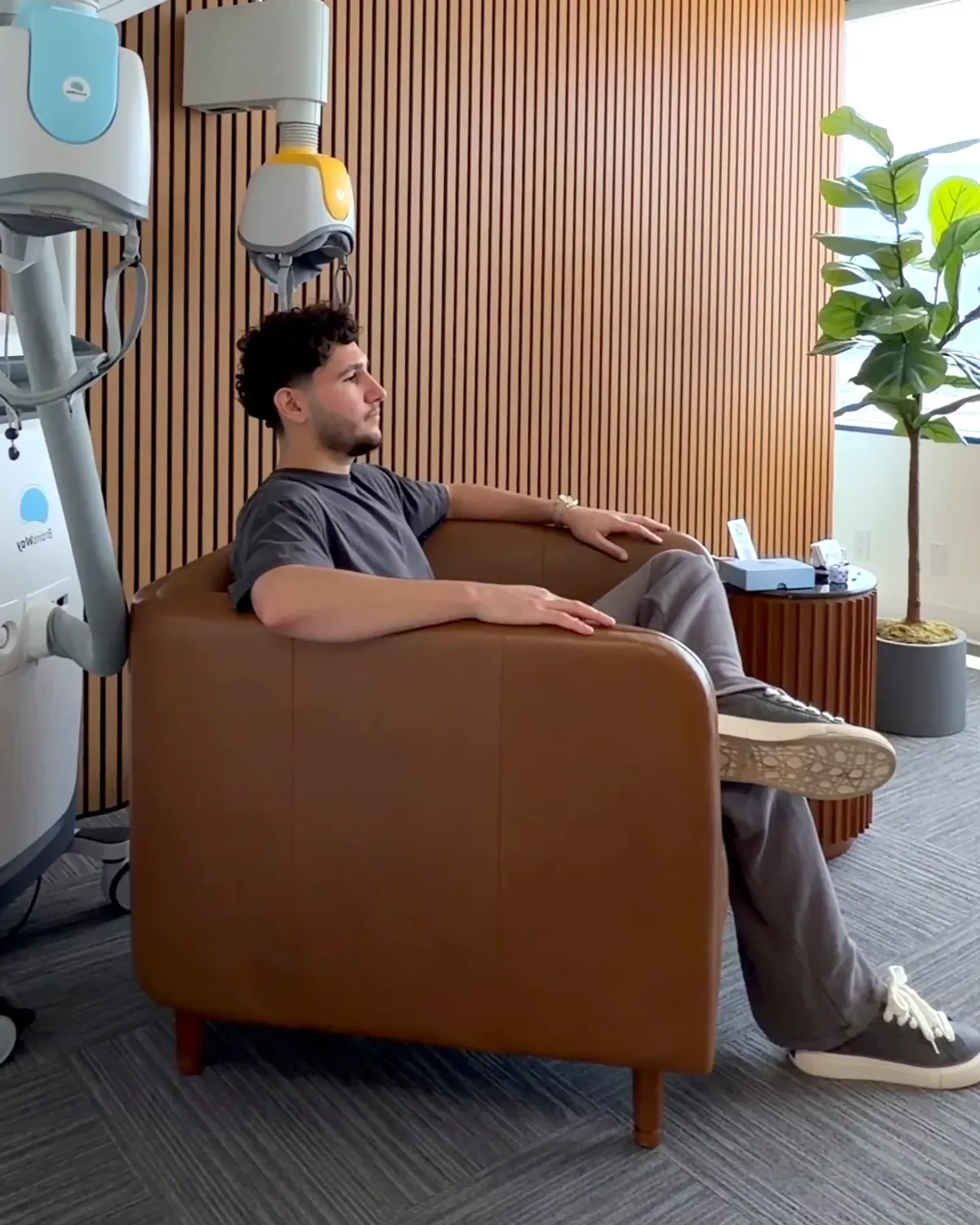
During a session, you will:
- Sit in a comfortable treatment chair
- Wear a helmet that positions the treatment coil
- Feel a tapping or pulsing sensation on the scalp
- Remain awake and alert the entire time
- Return to your normal day after the appointment
There is no anesthesia and no recovery period. Many patients drive themselves to and from appointments and go straight back to work, school, or home.
What to Expect
-
Consultation
You meet with our care team to talk through your history, your goals, and whether Deep TMS is worth pursuing.
-
Personalized Brain Mapping
Your first treatment visit includes a personalization step, often called mapping. Our provider finds your exact treatment location and stimulation level, then rechecks it periodically through the course. This visit runs longer than the sessions that follow.
-
Comfortable In-Office Sessions
You sit in a treatment chair wearing a cushioned helmet. Most people describe a tapping sensation on the scalp. You stay fully awake and alert the entire time, and patients spend sessions watching TV, on their phone, or talking with us.
-
Quick and Convenient
Up to 20-minute sessions, short enough to fit around work or school.
-
No Downtime
There is no anesthesia and no recovery period. Drive yourself home, return to work, and resume your day immediately after.
-
Your Course
A standard course runs sessions 5 days a week for 6 weeks, plus 2 weeks of taper sessions, for about 8 weeks in all. The response builds as sessions accumulate. An accelerated course, also FDA-cleared for major depressive disorder, condenses the core course into six treatment days; accelerated schedules are often self-pay. We review your progress with you as you go.
How Long TMS Treatment Takes
Protocols vary based on the condition being treated and the coil used. Many Deep TMS sessions are brief (about 20 minutes or less), and treatment is commonly delivered on weekdays over several weeks. A full course runs about 8 weeks: sessions 5 days a week for 6 weeks, plus 2 weeks of taper sessions. Some protocols take significantly less time. We will review your recommended schedule during your consultation so you can plan around work or school.
A course runs on weekdays, but it does not have to be an unbroken run. If you have a trip booked or a week you cannot make, tell us when we build your schedule and we plan the course around it rather than asking you to choose. Missed days are made up; they do not restart your course.
Standard vs Accelerated Protocols
Standard protocols are typically completed over several weeks with one session per weekday.
Accelerated protocols involve multiple sessions per day over a shorter time period. We offer an FDA-cleared accelerated Deep TMS protocol for major depression that condenses the core course into six treatment days. Coverage of accelerated schedules is not uniform across plans. We will explain the trade-offs if an accelerated option is relevant to you.
Tracking Progress
We monitor symptoms and your experience throughout the course, then make small adjustments to support comfort and results. Tracking matters because improvement often builds gradually, seeing your trend over time helps you and your provider make informed decisions.
What TMS Treatment Feels Like
Most people feel tapping and mild pressure on the scalp. Some experience a temporary headache early in the course. Comfort typically improves as your body adapts and as we fine-tune positioning.
If you are still weighing your options, start with what TMS is and how it compares to other treatments, or explore the conditions we treat, including TMS for depression and TMS for OCD. We treat adults and adolescents aged 15 and up: see our overview of adult TMS therapy in Los Angeles or teen TMS therapy for ages 15+.
Know What Your First Visit Looks Like